Vaca Muerta: Argentina’s World-Class Shale Opportunity
Vaca Muerta is a vast shale formation in the Neuquén Basin of northern Patagonia, Argentina, stretching across several provinces (Neuquén, Río Negro, Mendoza, La Pampa). Its geological endowment is extraordinary: the U.S. EIA estimates it contains 308 trillion cubic feet of technically recoverable shale gas and approximately 16 billion barrels of recoverable shale oil and condensate—making it the world’s second-largest shale gas reserve and fourth-largest shale oil reserve.
Current Development and Investment Needs
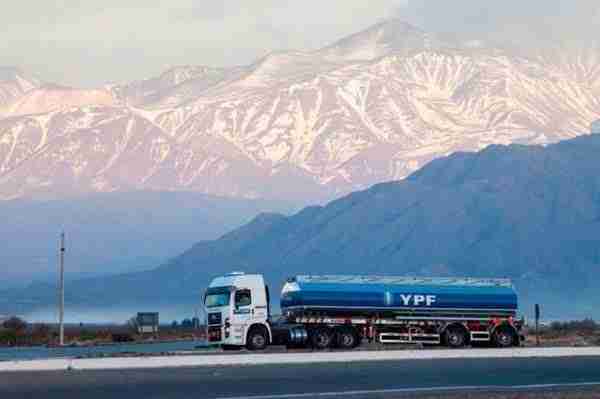
The site’s strategic importance for Argentina is significant. It is now central to the nation’s push for energy independence and export-driven economic growth. In 2024, YPF—the state-owned energy giant—allocated $3 billion specifically to Vaca Muerta shale operations, part of its broader $5 billion capital expenditure for the year. This shift involves divesting from conventional fields and reallocating resources to unleash Vaca Muerta’s full potential. YPF aims for a 24% increase in shale production in 2024 and a further 35% in 2025, targeting 160,000 barrels per day by year-end 2025.
Yet, the scale of required investment goes far beyond current domestic capabilities. Analysts estimate that Vaca Muerta’s infrastructure will require $58–$120 billion in new capital by 2030 for pipelines, LNG export terminals, and field development, excluding exploration and service contracts. Domestic capital alone cannot close this gap, highlighting the urgent need for Argentina to build investor trust and reliable infrastructure to compete globally.
Proven Results and Ambitious Targets
- Loma Campana, the pioneering Vaca Muerta development, led by YPF and Chevron since 2013, now produces approximately 100,000 barrels of oil equivalent per day, making it Argentina’s largest shale oil project.
- As new pipelines and processing plants, such as the $2.5 billion Vaca Muerta Sur pipeline (scheduled to transport 180,000 barrels/day and potentially up to 700,000 barrels/day post-2028), come online, Rystad Energy forecasts that total Vaca Muerta oil production could reach 1 million barrels/day by 2030.
- At a conservative Brent crude price of $60/barrel, this would translate to roughly $22 billion/year in gross revenue, significantly boosting Argentina’s trade balance and fiscal stability.
Infrastructure as the Key Bottleneck
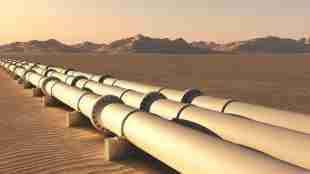
The largest hurdle remains infrastructure. Existing pipelines and export terminals limit the rapid scaling of production. Major midstream projects, like the Vaca Muerta Sur pipeline, are being executed under new investment regimes designed to incentivise long-term capital infusion (the RIGI scheme locks in favourable tax rules for 30 years and gradually lifts export duties).
The Strategic Shift
Foreign investors—totalling Chevron, Shell, Vista Energy, and Pan American Energy—are increasingly active, driven by both the exceptional quality of resources and new investment incentives. The sector’s trade balance is shifting from a chronic deficit to a growing surplus, with hydrocarbon exports projected to surpass agriculture by the end of the decade if production targets are met.
In summary, Vaca Muerta stands as a potential game-changer for Argentina’s energy sector and broader economy, but unlocking its full potential will depend on substantial, sustained infrastructure investment and regulatory stability to attract global investors. The prize is enormous: transforming Argentina into a major oil and gas exporter on a large scale, as early as 2030.

Founded in 2004, GTSA began as a single office in Buenos Aires. Since then, it has grown into a vibrant regional network, providing professional real estate marketing services to clients in AR, BR, CL, PY, PE, and UY.