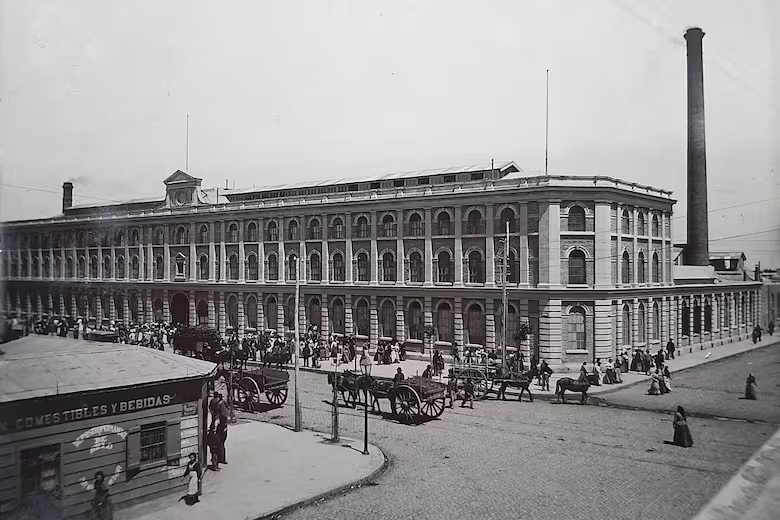
The “Scottish Espadrilles” refers to a fascinating chapter in Argentine industrial history involving Robert Fraser, a Scottish immigrant whose textile engineering expertise helped establish one of South America’s most iconic footwear companies. According to a comprehensive 2025 article by Germán Wille in La Nación, the Fraser family’s journey from Scottish sailmakers to Argentine industrialists illustrates a remarkable entrepreneurial adaptation to technological change.
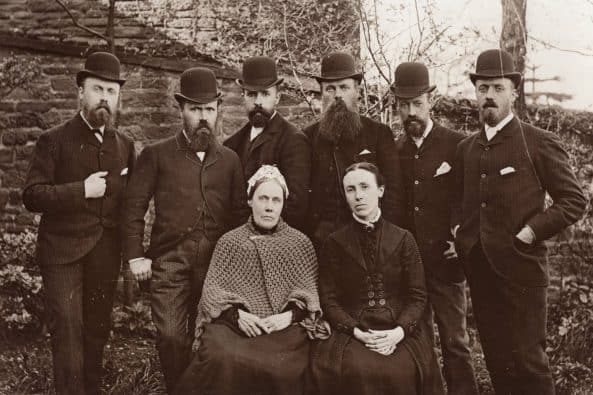
The Frasers of Arboath, Scotland, were the ones who started the history of the Argentine Espadrille Factory. From left to right: Norman, John, Douglas Jr., Patrick, and Robert Fraser; seated: Mary Ann Brydon Fraser and Isabella, circa 1880.
The Founding Partnership
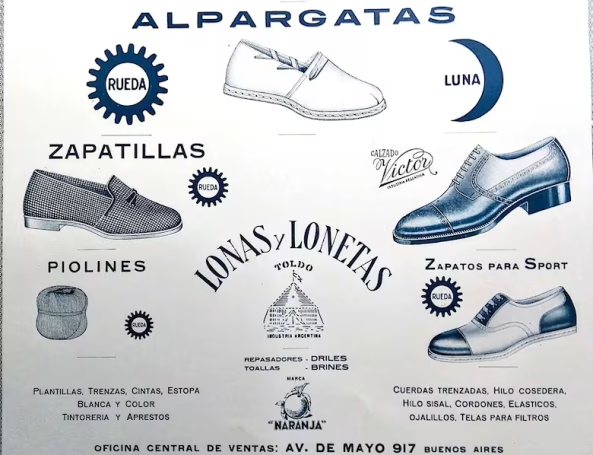
In 1883, Juan Echegaray, a Basque Argentine immigrant, partnered with Robert Fraser, a Scottish Argentine immigrant with a background in textile engineering, to manufacture espadrilles—the jute-soled canvas footwear favoured by labourers for their comfort, durability, and low cost. These humble shoes, called alpargatas in Spanish, would inspire the name of their company upon its incorporation in 1885 as “Sociedad Anónima Fábrica Argentina de Alpargatas”.
From Naval Sails to Footwear Innovation
The Scottish connection began in Arbroath, a distant Scottish port town, where Douglas Fraser and his sons operated a thriving canvas factory. Their primary client was the British Royal Navy, purchasing materials for ship sails. When maritime navigation transitioned from sail to steam power, the Fraser family business faced complete collapse, forcing them to seek new ventures.
The transformation came through existing business relationships—the Frasers contacted all their canvas buyers worldwide, including Juan Etchegaray, a Basque shoemaker in Buenos Aires. When asked about his canvas usage, Etchegaray explained he used it for espadrille uppers. The Frasers, completely unfamiliar with espadrilles, requested samples and were astonished to discover the soles were pressed with jute fibres—a material extensively worked in Scotland but never applied to footwear.
The Industrial Revolution of Alpargatas
The breakthrough came from Norman Fraser, the youngest and most inventive brother, who developed the jute braiding machine in 1880—remarkably, the same machine still functions today at the Alpargatas Textil factory in Bella Vista, Corrientes. This Scottish engineering innovation transformed artisanal espadrille production into an industrial process.
The original partnership, “Etchegaray y Fraser,” established in Buenos Aires in 1884 at Montes de Oca 165 (now 1135) in Barracas, lasted less than a year due to Etchegaray’s failure to contribute any capital. The Scottish investment was salvaged when Douglas Fraser Jr. met Reginald Neild, a British railway development specialist, during a four-week voyage to Buenos Aires. On January 7, 1885, they established the “Sociedad Anónima Fábrica Argentina de Alpargatas” with predominantly British shareholders connected to the railway industry, and Robert Fraser became the first factory manager.
Rapid Growth and Social Innovation
By 1887, Alpargatas had become one of Buenos Aires’ three largest factories, serving 260 wholesale clients and employing 530 workers—450 of whom were women, reflecting both their superior attention to detail and the lower wages they received. The company pioneered worker benefits decades before legislation required them, including company doctors, dentists, and Christmas bonuses worth three to five times monthly salaries.
The Scottish heritage influenced management philosophy—having experienced persecution from England, the Frasers emphasised human dignity and direct patron-worker relationships. Robert Fraser’s grandfather maintained the tradition of personally greeting every worker, inquiring about their families, and addressing individual needs through a secretary who took notes.
Cultural Impact and Industrial Legacy
The timing proved perfect, as demand for these unassuming shoes grew with the massive wave of immigration to Argentina during the 1880s. By 1910, the factory sold 4.5 million pairs annually under the Rueda brand; by 1954, 15 million pairs; and by 1965, an astounding 60 million pairs—enough to shoe the entire country.
Alpargatas became deeply embedded in Argentine culture through Florencio Molina Campos’ iconic calendar illustrations, starting in 1931. The artist received 6,000 pesos for 12 original paintings—a substantial sum, considering his works typically sold for 50-100 pesos. The company also created legendary brands, including Pampero, Flecha, Havaianas, and Topper. The original rubber formulation for Havaianas flip-flops was actually developed in Argentina before becoming Brazil’s most famous export.
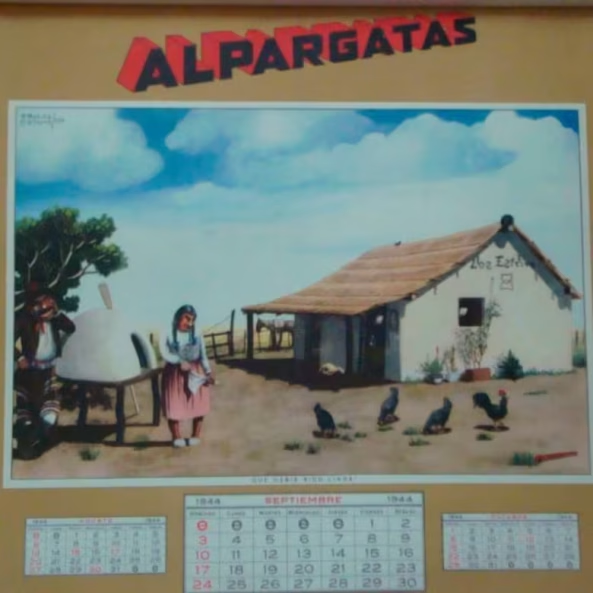
The company calendar, featuring illustrations by Florencio Molina Campos, was an artistic gem that was accessible to everyone and marked an era.
Family Legacy and Modern Continuation
The last Fraser family member, Don Roberto Fraser, retired from company management in 1971 after 25 years and left the board entirely in 1974. Today, Robert Fraser (62), a descendant of the founding Scottish family, authored “Los alpargateros Escoceses: la historia de Alpargatas”—an eight-year research project that documents this remarkable Scottish-Argentine industrial legacy.l
The Scottish espadrille story illustrates how immigrant expertise and entrepreneurship influenced Argentine industry, with Fraser textile engineering knowledge playing a pivotal role in transforming simple peasant footwear into a continental business empire that continues through Alpargatas Textil and Topper Argentina.
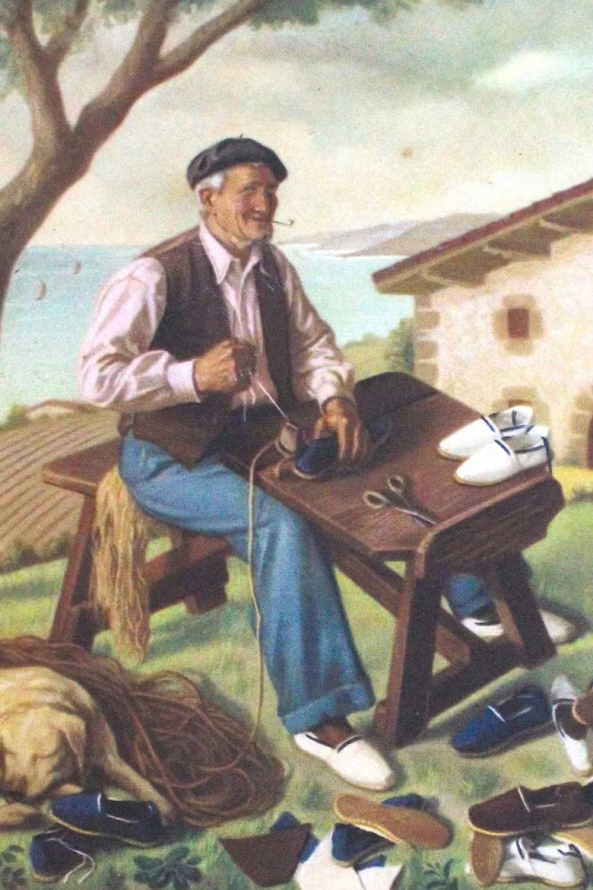
The Old Espadrille traditional shoe maker, by M. Flrs Kaperotxipi

Founded in 2004, GTSA began as a single office in Buenos Aires. Since then, it has grown into a vibrant regional network, providing professional real estate marketing services to clients in AR, BR, CL, PY, PE, and UY.