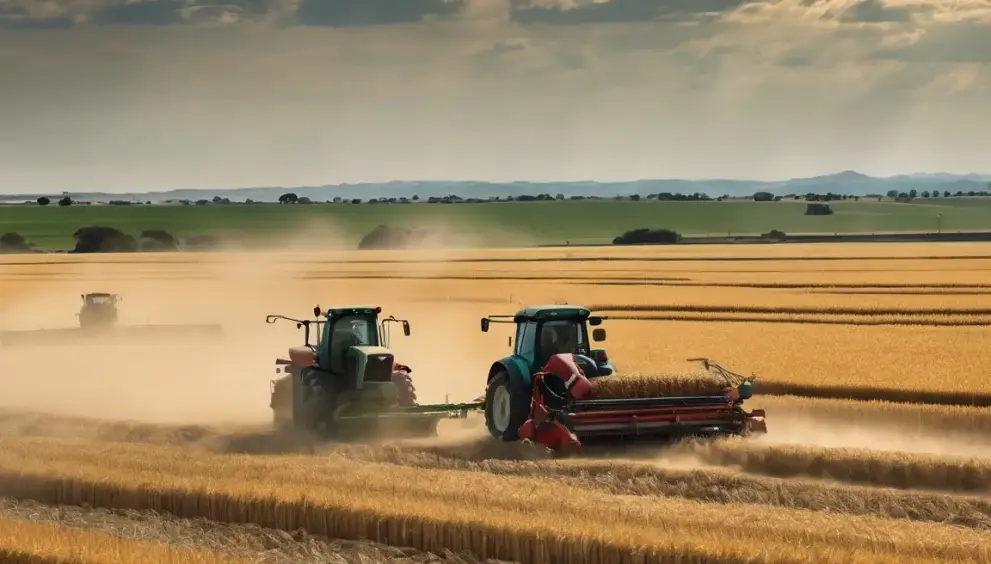
Argentina’s grain farming sector is a vibrant and dynamic engine of the national economy, characterised by innovation, adaptability, and a significant contribution to global food security. Despite facing challenges such as fluctuating international prices and evolving land ownership models, the sector demonstrates remarkable resilience and remains a key player in the international agricultural landscape.
Robust Production and Diverse Operations
Argentina boasts a substantial agricultural output, supported by a diverse range of farming operations. According to recent data, 88,527 agricultural producers cultivate 37 crop varieties across the nation. While many farmers lease land to expand their operations, a significant number, 37,641, cultivate their own land, demonstrating a strong commitment to direct farming. This mix of owned and leased land allows for flexibility and scalability in response to market demands and economic conditions.
The System of Mandatory Declaration of Planting Data (SISA) highlights an increasing trend toward land leasing among larger-scale producers. Those planting between 800 and 3,000 hectares typically rent three hectares for every owned hectare, while producers over 3,000 own 1.37 million hectares and lease an additional 4.9 million. This indicates a strategic approach to maximising production capacity and efficiently utilising available resources.
Economic Contributions and Land Usage
The agricultural sector’s financial impact is substantial. While land rental costs can be significant, estimated at approximately $20 per leased hectare in 2024, the income generated by landowners from these leases totals around $4.8 billion annually. This revenue supports rural communities and contributes to the overall economic health of the nation.
According to the National Registry of Rural Lands of Argentina, a small percentage (0.89%) of direct farmer-owners controls a significant portion (33.89%) of the surface area, averaging 22,000 hectares each. Meanwhile, the vast majority (99.11%) of owners share the remaining 66.11%. This distribution highlights the presence of both large-scale and smaller-scale farming operations, each playing a vital role in the sector.
Key Players and Their Impact
Several prominent companies and families contribute significantly to Argentina’s agricultural landscape:
- Benetton Group: Manages 900,000 hectares through Compañía de Tierras del Sud Argentino, focusing on livestock, forestry, and mining businesses.
- Braun Menéndez Family: Holds 750,000 hectares and is involved in the supermarket chain La Anónima SA, demonstrating diversification and integration across sectors.
- Walbrook Group: Manages 600,000 hectares under Nieves de Mendoza, integrating tourism with agriculture through properties that include popular tourist sites.
- Cresud SA: Headed by Eduardo Elsztain, possesses 538,822 hectares across multiple provinces and engages in oilseed, cereal, sugarcane, and meat production, with real estate development through Inversiones y Representaciones Sociedad Anónima (IRSA).
- Sapag Family: Controls 420,000 hectares in Neuquén, influencing public works and construction in the region.
- Pluspetrol: Owns 320,000 hectares and is a leader in Latin America’s oil, gas, and lithium sectors, expanding from Neuquén to other countries.
- Pérez Companc Family: Claims 290,000 hectares managed through Goyaique Sacif, with significant holdings in Molinos Río de la Plata SA and Molinos Agro SA, strengthening the domestic and export markets.
- Zingoni-Arze Family: Manages 250,000 hectares in Neuquén, focusing on cattle business through various ranches.
- Los Grobo Group: Manages approximately 260,000 hectares through rental agreements, emphasizing shared risk models and association with owners.
- Adecoagro: Owns 217,810 hectares across several provinces, producing a variety of crops and dairy products.
- Ledesma SAAI: Uses 157,000 of its 212,429 hectares for sugarcane harvesting in Jujuy, supporting paper and derivative manufacturing.
- Urquía Family: Cultivates 200,000 hectares with cereals and oilseeds through Aceitera General Deheza, also owning storage lands across multiple provinces.
- Lartirigoyen SA: In association with Glencore (now Viterra), collaborates with over 55 producers, focusing on cereal and livestock production.
These entities, along with numerous other farmers and businesses, collectively contribute to the sector’s strength and diversity.
Adaptability and Innovation
Argentina’s grain farmers have demonstrated an ability to adapt to changing market conditions and embrace innovative practices. Despite challenges such as declining international soybean prices in 2024, producers continue to seek efficiencies and explore new opportunities. The sector is characterised by a “three-tier” structure consisting of landowners, rural contractors, and grain pools, fostering a dynamic environment where different players contribute specialised expertise.
The presence of large financial groups, or grain pools, dedicated to renting land and sowing it for export reflects a sophisticated approach to agricultural investment. Additionally, expanding agro-exporting companies into stockpiling and farm leasing indicates a strategic integration of the value chain, enhancing efficiency and competitiveness.
Global Trade and Export Leadership
Argentina plays a crucial role in the global grain market, with a significant portion of its production destined for export. Companies such as ADM, Bunge, Cargill, Louis Dreyfus (LDC), Viterra, COFCO, Aceitera General Deheza, ACA, and Molinos Agro collectively handle 80% of the country’s grain and derivative exports. This concentration of expertise and infrastructure facilitates the efficient movement of agricultural products to international markets, contributing to Argentina’s reputation as a reliable supplier.
Challenges and Opportunities
While the Argentine grain farming sector faces challenges such as fluctuating international prices, land concentration, and financial pressures, it also possesses significant opportunities for growth and development. The sector’s adaptability, innovation, and commitment to sustainable practices position it for continued success. By embracing new technologies, fostering collaboration among stakeholders, and promoting policies that support agricultural development, Argentina can further enhance its position as a global leader in grain production and trade.
Contact the Gateway to South America team to discover the best investment opportunities in the region. This company sets the standard for foreign investors aiming to invest in Argentina, Brazil, Chile, Paraguay, Peru, and Uruguay, providing expert guidance on property acquisition and investment tours.
Argentina – Brazil – Chile – Paraguay – Peru – Uruguay
The Gateway Team – When You’re Serious About Property
www.gatewaytosouthamerica.com

Founded in 2004, GTSA began as a single office in Buenos Aires. Since then, it has grown into a vibrant regional network, providing professional real estate marketing services to clients in AR, BR, CL, PY, PE, and UY.