This post is also available in:  Español
 Português
Peru’s agricultural export sector is entering a new phase of expansion, bringing opportunities for investment, new crops and international trade. But long-term success will depend on more than increasing production. Governance, responsible investment and sustainable resource management will be central to the sector’s future.
These themes shaped discussions at Agrotrade & Agronight 2026, held in Lima on September 3. The event brought together nursery industry representatives, agricultural businesses and investment specialists. It was organised by Chilean Nurseries (AGV) and ProChile,
A sustainable financing panel organised by Asesorías del Agro GCA explored how Peru can support agricultural growth while meeting rising environmental, social and commercial expectations.
Year-Round Demand Creates Opportunities for Peru
A key theme was the opportunity to supply Northern Hemisphere markets with high-value fresh produce and individually quick-frozen (IQF) products year-round.
Panel discussions highlighted Peru’s Southern Hemisphere location, Pacific coast access and expanding agricultural export industry as important advantages in serving these markets.
Participants also considered how changing geopolitical conditions could create new investment opportunities for Peru and other Latin American agricultural economies.
However, expanding production raises an important commercial question: how long will demand continue to outpace supply, and which crops will offer the strongest opportunities?
Irrigation Projects Could Transform Agricultural Production
According to figures discussed at the seminar, Peru could add up to one million hectares of agricultural land. Priority irrigation projects could bring at least 400,000 additional hectares into production in the coming years.
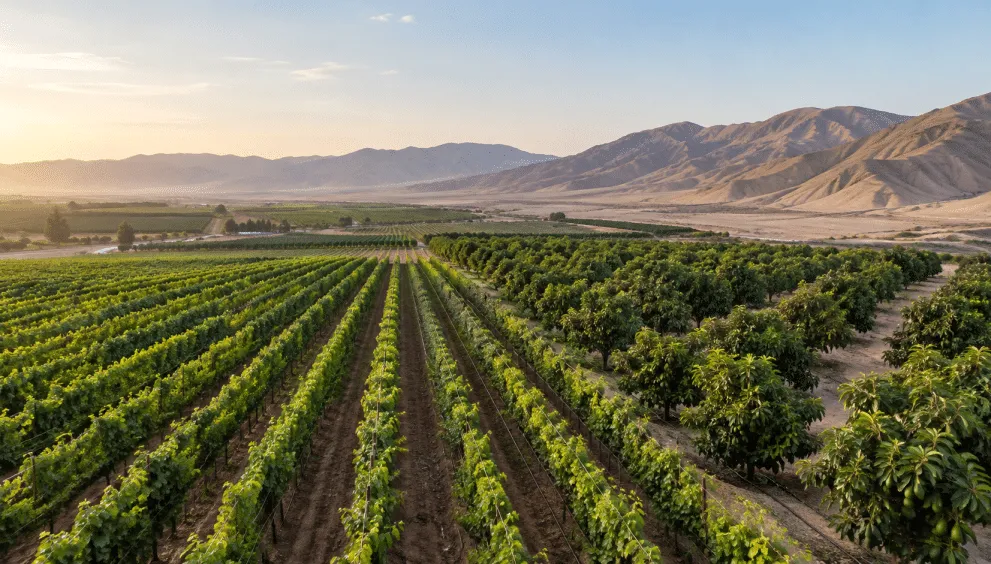
Such expansion would create opportunities for further investment in established export crops, including:
• Table grapes.
• Blueberries.
• Avocados.
• New crops and varieties suited to emerging market demand.
The challenge is not simply to plant more hectares. Investment decisions must also consider market capacity, water availability, infrastructure, operating costs and long-term profitability.
Sustainable Finance Must Support Sustainable Growth
Agricultural expansion will require substantial capital expenditure, from land development and irrigation to planting, packing facilities and export infrastructure.
The panel emphasised that environmental, social and governance considerations—commonly known as ESG—must form part of investment assessment and business planning.
Impact investment takes this approach further by targeting specific, measurable environmental or social outcomes alongside financial objectives.
For Peru’s agricultural exporters, the central question is how to finance growth in a way that strengthens both commercial performance and long-term resilience.
More Demanding Finance Can Create Better Businesses
Accessing sustainable finance can involve more demanding assessments, reporting obligations and compliance requirements than conventional lending.
However, panel participants highlighted how this process can help businesses identify weaknesses, improve management systems and prepare for future market expectations. It can also open access to additional financing opportunities, including some forms of non-repayable support.
The experiences of Valle&Pampa and Family Farms Perú were highlighted as examples for businesses exploring sustainable agricultural development and financing.
Three Priorities for Agricultural Finance
The discussion identified several areas for further work.
1. A Common Language for Sustainable Investment
Banks and agricultural businesses need clearer, shared criteria for assessing sustainability.
A common taxonomy—a classification system defining relevant activities and standards—could help lenders and borrowers evaluate projects more consistently and communicate ESG requirements more effectively.
2. Better Management of Agricultural Waste
Agricultural expansion and the replacement of older varieties will increase the need to manage materials such as:
• Plastic pots and growing bags.
• Irrigation pipes and equipment.
• Agricultural plastics.
• Packaging and other production waste.
The panel highlighted extended producer responsibility and improved waste management as important considerations as the sector grows.
3. Respect for Plant Variety Protection
Participants also called for stronger respect for plant breeders’ rights and relevant UPOV standards, including concerns about compliance in Chile.
This issue is closely connected to the nursery industry and the development, licensing and commercial use of new plant varieties.
Governance Remains the Central Challenge
Across the panel discussion, governance emerged as a central priority for sustaining agricultural export growth.
Environmental and social commitments require effective management, clear responsibilities, transparent reporting and credible oversight. Without these foundations, businesses may struggle to turn sustainability objectives into measurable results.
The message was clear: rising food demand and expanding irrigated farmland will require more capital investment, higher operating expenditure, and more financing. Businesses will also need sufficient profitability to support those commitments over time.
Export Markets Are Raising Sustainability Expectations
Another theme at Agrotrade Lima 2026 was the growing influence of importing-country regulations on agricultural production, packaging and investment.
The discussion highlighted three European Union regulatory developments that exporters should monitor.
Packaging and Packaging Waste Regulation
The EU’s Packaging and Packaging Waste Regulation (PPWR) introduces requirements relating to packaging sustainability and waste.
For agricultural exporters, the discussion focused on the need to review packaging materials, recyclability and the requirements applicable to products entering European markets.
Environmental Claims and Greenwashing
The Empowering Consumers for the Green Transition directive, often referred to as EMPCO, addresses misleading environmental claims.
The seminar highlighted the risks of broad descriptions such as “green,” “eco-friendly”, or “planet-friendly” when businesses cannot adequately substantiate them.
For exporters and marketers, the practical message is to support environmental claims with clear explanations and credible evidence.
Deforestation-Free Supply Chains
The EU Deforestation Regulation (EUDR) was also discussed, particularly for relevant exports such as coffee, cocoa and timber.
Traceability, plot geolocation and supply-chain due diligence were identified as important considerations for affected businesses.
The discussion also encouraged fruit and vegetable exporters to monitor evolving buyer expectations around digital traceability and responsible land management, while distinguishing those expectations from the regulation’s specific product coverage.
Collaboration Will Help Shape the Next Stage of Growth
Asesorías del Agro GCA organised the sustainable financing panel at Agrotrade 2026, bringing together perspectives from finance, legal services and agricultural production.
The organisers thanked DEB Invest, responsAbility, Araya & Cía and, in particular, Juan Pablo Bentin and Family Farms Perú for their participation and contribution to the discussion.
The seminar’s broader message was that agricultural expansion and sustainability should not be treated as separate objectives. The quality of investment, management and governance will help determine whether today’s growth opportunities deliver lasting value.
From Discussion to Practice in Ica
A Redagrícola On the Road video accompanying the discussion showcases agricultural activity in Peru’s Ica region, providing an on-the-ground perspective on the sector’s development.
The featured material includes Pampa Baja, Ica, and offers a practical complement to the seminar’s discussions about production, investment and sustainable growth.
Further Reading on Sustainable Banking and Investment
The accompanying reading materials include publications from:
• United Nations Environment Programme Finance Initiative (UNEP FI).
• Organisation for Economic Co-operation and Development (OECD).
• Climate Policy Initiative.
• CAF—Development Bank of Latin America and the Caribbean.
These resources complement the discussion of sustainable banking, agricultural investment and climate finance.
Source: Asesorías del Agro GCA and Managing Partner Gustavo Cardemil moderated the venue.

Gustavo is the Managing Director & Founding Partner of Asesorias del Agro GCA Ltda, a niche consultancy firm specialised in Financial advisory, rural real estate, and services for the agricultural sector since 2015. Gustavo is a multidisciplinary professional, with more than 20 years of experience in agriculture and finance, with vast knowledge in management, strategy, banking and rural financial risk assessment in Chile and Peru.