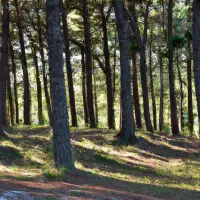
Uruguay Land Sales and Global Investment in Farmland and Forestland
Introduction
Uruguay’s land market has undergone a remarkable transformation over the past two decades, with land prices increasing tenfold from USD 386 per hectare in 2002 to USD 3,967 per hectare in 2024. This dramatic appreciation reflects the country’s integration into a broader global phenomenon: the financialization of agriculture and forestland in the 21st century. Uruguay’s experience exemplifies how international capital flows, commodity market dynamics, and institutional reforms have converged to establish farmland and timberland as recognised asset classes for institutional investors. The country’s trajectory offers valuable insights into how emerging markets have attracted substantial foreign investment while maintaining institutional stability and regulatory transparency.
Global Context: The Farmland and Forestland Investment Boom
Macroeconomic Drivers
The global surge in farmland and forestland investment emerged from significant macroeconomic disruptions between 2000 and 2015. Following the dot-com bubble collapse and the 2008 financial crisis, institutional investors sought alternative assets that could serve as stores of value during periods of financial volatility. Central banks’ responses to these crises created an environment of historically low interest rates from 2001 through 2015, prompting a widespread search for yield among pension funds, endowments, and other institutional capital. Agricultural land exhibited a negative correlation with equity markets, making it particularly attractive for portfolio diversification strategies during this turbulent period.
Commodity Markets and Food Security
The commodity supercycle from 2003 to 2011 generated annual price growth of 5.5 per cent, fundamentally altering investor perceptions of agricultural assets. The 2007-2008 food crisis proved particularly influential, with food prices increasing by 54 per cent overall, cereals rising by 92 per cent, and oils climbing by 84 per cent. Growing demand from rapidly industrialising economies in China and India, combined with population projections suggesting increased pressure on arable land, reinforced the strategic importance of farmland holdings. Biofuel mandates in the United States, European Union, and Brazil further intensified competition for agricultural land, with 60 per cent of global land acquisitions between 2000 and 2010 directed toward biofuel crop production.
Institutional Framework Development
The transformation of agriculture into a recognised asset class required substantial institutional infrastructure development. Timber Investment Management Organisations (TIMOs) pioneered many of these approaches, establishing operational models that other agricultural investors later adopted. ERISA reforms in the United States enabled pension funds to allocate capital to farmland investments, while NCREIF indices provided performance benchmarks that facilitated institutional decision-making. The scale of this shift is evident in U.S. institutional farmland investment growth, which increased from USD 900 million in 2004 to USD 11.7 billion in 2020.
Uruguay’s Land Market Evolution
First Period: High Volume Expansion (2003-2008)
Uruguay’s land market experienced explosive growth during the first phase, with an average of 760,667 hectares traded annually. Land prices surged from USD 420 per hectare in 2003 to USD 1,844 per hectare by 2008. Soy cultivation expanded dramatically from less than 10,000 hectares in the 1990s to 460,000 hectares by 2008, driven primarily by Argentine agricultural pools seeking competitive advantages. Forestry investments received substantial impetus from the Botnia/UPM cellulose project initiated in 2007, which catalysed industrial-scale timber operations. Uruguay’s comparative advantages during this period included lower land costs relative to regional competitors, favourable taxation policies, and improved infrastructure.
Second Period: Consolidation with Price Growth (2009-2013)
Following the global financial crisis, Uruguay’s land market entered a consolidation phase characterized by reduced transaction volumes averaging 344,000 hectares annually, even as prices continued ascending to USD 3,519 per hectare by 2013. The post-crisis recovery coincided with a second commodity cycle driven by Chinese economic stimulus programs that increased import demand for agricultural products. Geographic price differentiation became pronounced during this period, with southwestern departments, including Soriano, Colonia, and Canelones, commanding prices exceeding USD 8,600 per hectare, while northern departments, such as Tacuarembó, Rivera, and Treinta y Tres, traded at USD 3,045 to USD 3,435 per hectare.
Third Period: Low Volume with Volatility (2014-2024)
The third phase exhibited further volume contraction, averaging 213,636 hectares traded annually, punctuated by two distinct sub-periods: a decline from 2014 to 2020 and a recovery from 2020 to 2024. The market demonstrated renewed vigour in 2024, with 375,497 hectares changing hands for a total value of USD 1.489 billion, reaching record prices of USD 3,967 per hectare. This recent resurgence reflects continued investor confidence in Uruguayan agricultural and forestry assets despite global economic uncertainties.
Foreign Investment Patterns in Uruguay
Uruguay has attracted a diverse portfolio of international investors from the United States, Japan, Europe, Argentina, and Brazil, establishing itself as a premier destination for agricultural and forestry capital. The country ranks second in Latin America on the Milken Institute Global Opportunity Index, reflecting its robust institutional framework. Uruguay’s legal system provides equal treatment for both foreign and domestic investment, imposes no capital repatriation restrictions, and maintains bilateral investment agreements with over 30 countries. The transparent land transaction reporting system administered by DGR (Direccion Nacional de Registros, National Directorate of Registries) further enhances investor confidence by providing reliable market data.
Comparative Regional Analysis
Latin American farmland and forestland investment patterns have generally featured private corporate structures rather than the state-led acquisitions more common in Sub-Saharan Africa, where over 18 million hectares were acquired between 2005 and 2015. Principal Latin American destinations include Brazil, Argentina, Colombia, Uruguay, Paraguay, and Bolivia. Investment return profiles vary significantly by geography, with U.S. farmland generating annual returns of 11 to 12 per cent from 2000 to 2015, temperate timberland yielding 6 to 8 per cent, and emerging market timberland in South America achieving real returns of 11 to 20 per cent. Uruguay distinguishes itself through moderate transaction scales compared to its regional neighbours, stronger institutional frameworks, superior protection of property rights, and greater regulatory transparency and stability.
Conclusion
Uruguay’s integration into the global farmland and forestry investment wave exemplifies the successful establishment of agricultural assets as institutional investment vehicles. The country has leveraged its competitive advantages—including favourable climate conditions, robust legal frameworks, transparent market mechanisms, and strategic geographic positioning—to attract substantial international capital while maintaining economic stability.
Contact the Gateway to South America team to discover the best investment opportunities in the region. This company sets the standard for foreign investors aiming to invest in Argentina, Brazil, Chile, Paraguay, Peru, and Uruguay, providing expert guidance on property acquisition and investment tours.
Argentina – Brazil – Chile – Paraguay – Peru – Uruguay
The Gateway Team – When You’re Serious About Property
www.gatewaytosouthamerica.com

Hector is a highly regarded agricultural consultant with exceptional interpersonal skills and extensive farming knowledge. His empathy fosters strong client relationships. Innovative and adaptable, he excels in various work settings. Hector’s expertise is bolstered by advanced degrees, including a PhD from New Zealand.