This post is also available in:  Español
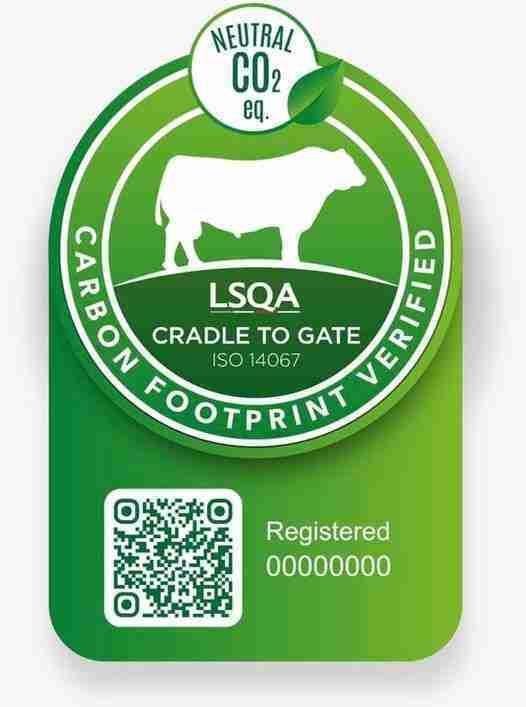
Uruguay has become the first country in South America to export certified carbon-neutral meat, marking a significant milestone in the region’s sustainable agriculture efforts. The inaugural shipment, produced by the Uruguayan company Mosaica and certified by the local body LSQA, was destined for Switzerland and represented a historic step for both Uruguay’s meat industry and South American exports.
Certification of carbon-neutral meat in Uruguay involves a comprehensive “Cradle to Gate” assessment overseen by LSQA, which quantifies emissions throughout the entire production chain—from the birth of livestock through fattening to slaughter. The certification process utilises standards established by the International Organisation for Standardisation (ISO) and greenhouse gas guidelines from the Intergovernmental Panel on Climate Change (IPCC). Farmers are required to document their emission sources and mitigation strategies, which may include practices such as grazing on natural pastures and conservation of native forests to offset emissions.
Uruguay’s cattle sector is a major part of the economy, contributing over 7% to GDP, with cattle populations outnumbering people approximately four to one. However, agriculture is also responsible for approximately 75% of the country’s greenhouse gas emissions, primarily due to methane emissions from livestock. In response, Uruguay has signed the Global Methane Pledge and is actively working on measures to reduce livestock-related emissions by 30% by 2030.
The initiative to certify and export carbon-neutral meat positions Uruguay as a pioneer in environmentally friendly meat production in South America, potentially encouraging similar advancements among other major beef-producing nations in the region, such as Argentina, Brazil, and Paraguay. This move also aligns with global consumer demand for sustainable products and may offer substantial market advantages to Uruguayan exporters.
There is some emerging debate concerning the methodology used to measure livestock methane emissions, particularly the possible adoption of the GWP* accounting method favoured by the meat industry, which some critics argue could understate actual climate impacts. However, Uruguay’s current approach relies on established international standards for emission accounting.
This achievement was highlighted in recent international events, such as Expo Osaka 2025, where Uruguay showcased its natural and carbon-neutral meat products, certified to international standards.
The consignment represents a “historic milestone,” according to Agustín Russi, Business Development Manager at LSQA, which is also active in other major meat-producing nations in the region, including Argentina, Brazil, Chile, Mexico, and Paraguay.
“The carbon footprint process is the closest thing there is to an accounting process, where instead of counting money, tons of carbon are counted,” Russi was quoted as saying by agricultural news outlet Blasina y Asociados.
Uruguay’s agricultural sector is a key pillar of the economy, with cattle outnumbering people in the country by approximately four to one, and the sector contributes more than 7% of the country’s gross domestic product.
However, according to LSQA, the agriculture sector is also responsible for producing an estimated 75% of the country’s greenhouse gas emissions, with Uruguay’s famed livestock industry one of the biggest polluters.
Much of that pollution is attributed to methane production, which was discussed during the recent COP26 climate summit in the United Kingdom, where Uruguay was one of 106 nations to support an ambitious Global Methane Pledge aimed at reducing worldwide emissions by 30% by 2030.
That target is particularly significant to Latin America, which is home to six of the world’s top 20 beef producers. The production and promotion of carbon-neutral meat promise to be critical to the industry having a more sustainable future.
How is Uruguay’s carbon-neutral meat certified?
Carbon-neutral meat is certified in Uruguay through a comprehensive “Cradle to Gate” study of the production process, carried out by LSQA. This study monitors carbon emissions related to rearing livestock from the moment they are born, through the fattening process, and up to the animals’ arrival at the slaughterhouse.
That involves standards set by the International Organisation for Standardisation (ISO), rules on product categorisation, and guidelines on greenhouse gases established by the Intergovernmental Panel on Climate Change (IPCC).
It also entails a “fingerprint inventory” that cattle farmers must self-produce to demonstrate their emissions, as well as efforts taken to mitigate them, all of which is verified by LSQA. Mosaica reportedly initiated an “arduous process” of data collection and management in 2021 to monitor its carbon footprint.
According to LSQA, the company achieved its status as a producer of carbon-neutral meat partly by using natural pastures, as well as through its engagement in native forest conservation.
Carbon-neutral meat offers promise to major beef producers
While Uruguay has established itself as a pioneer in carbon-neutral meat production in South America, this new development promises to have significant repercussions for the region, where the top six producers are responsible for more than 28% of global beef exports.

The Southern Cone sub-region — which includes Argentina, Brazil, Chile, Paraguay, and Uruguay — is a particular hotbed for beef production, with four of those nations among the world’s 20 top producers, while Chile sits in 25th.
Those four are also founding members of the Southern Common Market (Mercosur), a 30-year-old economic association that in 2019 announced an agreement in principle for a free trade agreement with the European Union — the South American bloc’s primary trading partner, as well as being the third-largest producer of beef globally.
With the ball now rolling on carbon-neutral meat and exports from Mercosur, and with all of its members apart from Paraguay having signed the Global Methane Pledge, it is likely only a matter of time before meat producers in other Mercosur countries seek to have themselves certified.
Meanwhile, elsewhere in the region, addressing pollution related to livestock production is also aligning with broader plans to reduce emissions, with sustainable cattle ranching forming a key part of Colombia’s plans to achieve carbon neutrality by 2050.
Source: BizLatin Hub
————
Contact the Gateway to South America team to learn about the best investment opportunities in the region. The company serves as a benchmark for foreign investors seeking to invest in Argentina, Brazil, Chile, Paraguay, Peru, and Uruguay, offering expert advice on property acquisition and providing investment tours.
The Gateway Team – When You are Serious About Property
www.gatewaytosouthamerica.com

Founded in 2004, GTSA began as a single office in Buenos Aires. Since then, it has grown into a vibrant regional network, providing professional real estate marketing services to clients in AR, BR, CL, PY, PE, and UY.