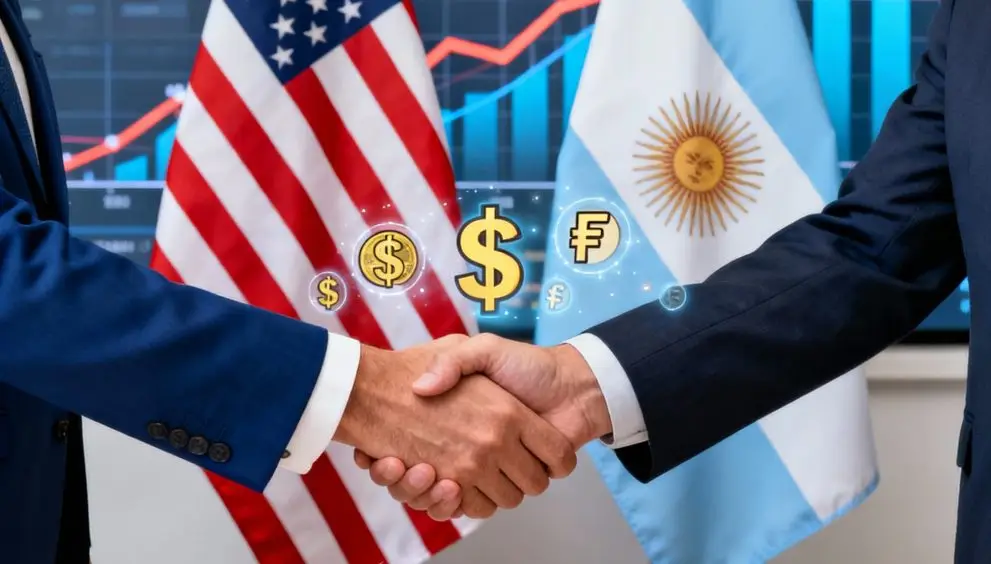
The United States announced comprehensive financial support for Argentina that bypasses Congressional approval, marking the second time a Trump administration has rescued a non-Peronist government. Treasury Secretary Scott Bessent pledged that Washington will do “whatever is necessary” to support Argentina, echoing Mario Draghi’s famous declaration during the Euro crisis, but now applied to the Argentine peso.
Rescue Package Mechanisms
The support package operates through three primary channels that avoid legislative oversight: currency swaps with Argentina’s central bank, direct purchases of Argentine currency, and acquisitions of U.S. dollar-denominated government debt through the Treasury’s Exchange Stabilisation Fund. Bessent, who previously worked with George Soros, explicitly stated that “all options for stabilisation are on the table”.
Historical Precedent and Strategic Context
This marks the second U.S. intervention to support a non-Peronist Argentine government. During Trump’s first presidency, his administration backed a $20 billion IMF agreement with Mauricio Macri’s government in 2018. The current intervention follows similar historical patterns, including the $20 billion Mexico rescue during Clinton’s presidency in 1994 and Uruguay’s $1.5 billion support package during its 2001 crisis.
Geopolitical Motivations
The timing reflects broader U.S. concerns about Latin American geopolitics. With left-wing governments in Mexico, Brazil, Colombia, Venezuela, Chile, and Uruguay, Argentina represents the region’s most significant right-wing ally. The Trump administration views Milei as crucial for countering Chinese influence, particularly in areas such as rare earth minerals and lithium deposits, where China maintains a global dominance.
Economic Crisis and Immediate Triggers
Argentina’s central bank sold over $1.1 billion in reserves during three days in September 2025 to defend the peso, representing the largest intervention since 2019. Country risk exceeded 1,500 basis points before the U.S. announcement, with the peso approaching the upper limit of its exchange rate band. The intervention came just before Argentina’s October 26 midterm elections, where Milei faces potential losses that could undermine his reform agenda.
Agricultural Policy Response
The Argentine government eliminated all export withholdings on agricultural products until October 31, 2025, aiming to generate $7 billion in dollar inflows. This temporary measure affects soybeans (previously taxed at 26%), corn and sorghum (previously 9.5%), and other grains. The policy addresses the problem that 14 million tons of corn and 15 million tons of soybeans remain withheld by farmers awaiting better prices.
Market Response and Effectiveness
Following Bessent’s announcement, Argentina’s country risk fell from over 1,200 points to below 1,000 points, while the peso strengthened and bonds rose by up to 6%. The immediate market response validated the intervention’s effectiveness as a stabilisation tool.
Rare Earth Minerals and Strategic Resources
Discussions between Trump and Milei include access to Argentina’s lithium and rare earth deposits, critical for technology manufacturing and defence applications. The U.S. seeks to reduce dependence on Chinese-controlled mineral supplies, viewing Argentina’s resources as strategically vital.
Bilateral Relationship Dynamics
Milei invested heavily in cultivating ties with Trump, making eleven trips to the United States since his election while neglecting to visit ten Argentine provinces. This diplomatic strategy proved effective when Milei risked his relationship with the Biden administration by openly supporting Trump’s 2024 campaign.
Agricultural Sector Challenges
Argentine agricultural productivity has lagged significantly behind regional competitors. Brazil has multiplied its production sevenfold over the past forty years and now produces twice as much as Argentina, while Paraguay and Uruguay also outpace Argentine farmers. The elimination of export taxes aims to reverse this decline by incentivising increased production.
The rescue package represents a calculated U.S. investment in maintaining a strategic ally while countering Chinese influence in Latin America, with Argentina’s economic stability serving broader geopolitical objectives in the region.

Founded in 2004, GTSA began as a single office in Buenos Aires. Since then, it has grown into a vibrant regional network, providing professional real estate marketing services to clients in AR, BR, CL, PY, PE, and UY.