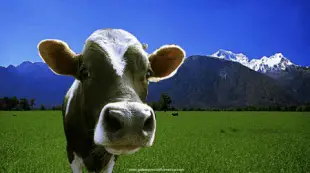
The Kiwi Group recently achieved 11th position on the 2022 list of Brazil’s 100 largest dairy producers. But its focus is not just on production; it has implemented many sustainable measures in pasture production.
In Silvania, Goiás, Brazil, the Kiwi Group is prominent in milk production. In 2022, they achieved 11th position on the Top100 largest dairy producers in Brazil list, with an average daily output of 42,295 litres. But their focus is not just on production. In addition, the group has implemented many sustainable measures in pasture production, such as a paddock rotation system and herds made of cross-bred and Jersey animals.
After working on dairy farms in New Zealand for 25 years, Owen Williams travelled the world searching for land to produce milk. In 2007, already in Brazil, together with Beatriz dos Reis, he bet his chips on a large-scale milk production project. It came with pasture-based feed and high expectations of profitability.
Now about to complete 13 years of production, the Kiwi Pecuária farm, belonging to a group of New Zealand investors, together with the Capoeira Farm, form the Kiwi Group, a reference in the sector for its search for excellence.

Recently, the Kiwi Group went through a succession plan. Azael Rössler, Leonel Barbaresco and Ilo Vieira manage the farm. They maintain the simple processes, milk quality, professional ethics, safety at work, sustainability of the operation, innovation mentality, respect for the environment and animal welfare as the basis of their business.
In addition to participating in the Sustainable Practices Program (PPS) with the dairy company to which Kiwi Pecuária supplies, the Kiwi Group sought innovation by joining the Net Zero program, a pilot project offered by the company. Participation in the project stimulated the adoption of sustainability strategies on the property. As a result, they rethought the property’s purpose and invested in initiatives.
“Our mission is to have a milk production model that preserves the environment, reducing our effects on climate change, energy and water consumption and preserving our biodiversity,” says the Group’s administrator and Veterinary Doctor, Azael.
Among the sustainability-oriented practices adopted at the farm, Azael highlights regenerative agriculture. “We seek to use regenerative agriculture. As a result, we have a diversity of intercropped forage species, focusing on the best use of the soil and available resources, without degradation”, also pointing out the use of manure for fertilization and reduction of chemicals in pastures. “In the pasture system, we have the enrichment of soil organic matter carried out by the animals themselves.
In recent years, the Kiwi Group observed a great improvement in the soil, contributing to a lower use of chemical fertilization. Some surplus manure ends up destined for silage production areas as well.”
The veterinarian emphasizes that the Kiwi Group has sought to apply sustainable practices since its beginning. After 7 to 8 years of adoption, the rotational pasture system improved the soils’ macro- and micronutrients and organic matter.
“There are several benefits credited to regenerative agriculture techniques on the Kiwi Pecuária farm, such as the fact that it manages to reduce the cost of production, which highly impacts the cost of the diet. Therefore, with the improvement of the soils, we have achieved full development of pastures in the dry and rainy season using central pivot irrigation,” he said.
The farm’s manager adds that the environmental returns benefit the farm when they adopt sustainable practices.
“The most motivating factor is to observe the return of the environment itself to the farm when sustainability is practised. For example, we can increase water to irrigate in critical periods or improve the soils of our own animals for better development. This is how we manage, through various strategies, to produce such a noble food for society as milk. We believe that every production system needs to be sustainable.
Our focus is strongly on soil management, which means being healthy and not being degraded. Over the years, it kept us competitive in the milk production sector, with less dependence on external inputs.”
Looking to the future, Azael says he wants to increase the practice of regenerative agriculture with new cultivars.
“We are thinking of continuing with regenerative agriculture, focusing on new and different cultivars that can adapt to the Brazilian Midwest – nitrogen-fixing species to reduce or eliminate nitrogen use to cultivate our pastures.
Evolving towards a renewable energy source for farms, using biodigesters, photovoltaics, and other sustainable practices are also part of our future plans, ” he concludes.
This article was recently published in the Brazil publication MilkPoint

Founded in 2004, GTSA began as a single office in Buenos Aires. Since then, it has grown into a vibrant regional network, providing professional real estate marketing services to clients in AR, BR, CL, PY, PE, and UY.